Head of Litigation
DISMISSED
Your vulnerability has no bearing
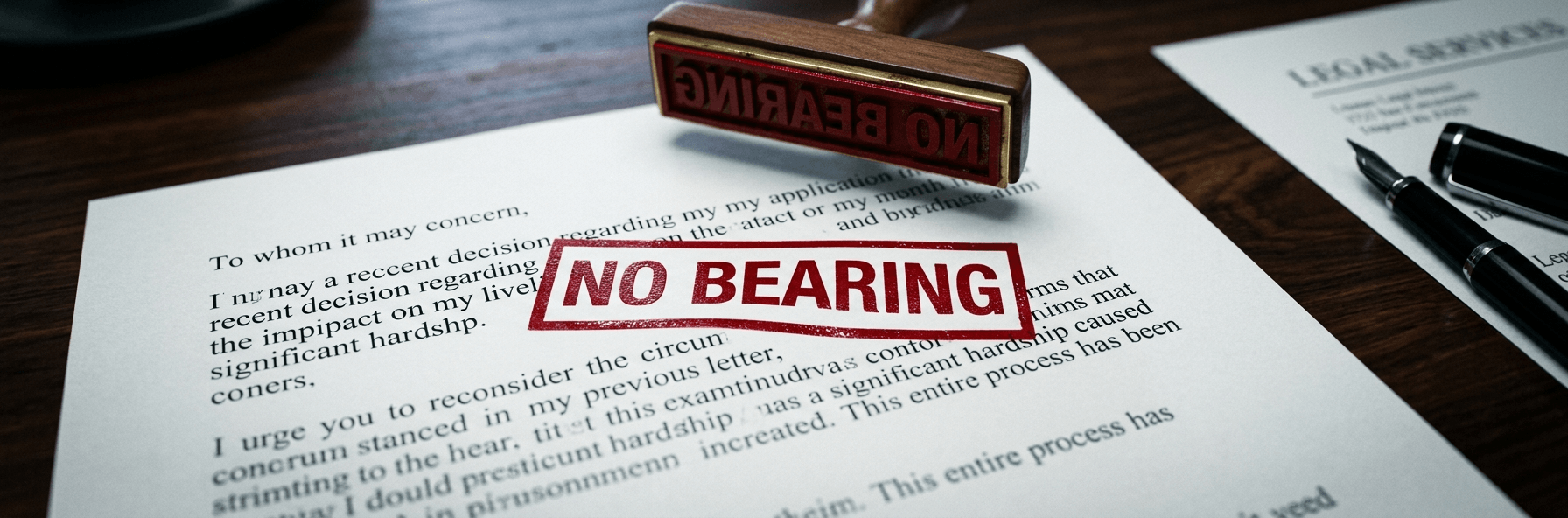
The words that changed everything
In early February 2026, Funding Circle's Head of Litigation and Legal Counsel took over our case personally. Laura. This was the most senior person we had dealt with. We expected engagement. We expected answers.
Instead, we got this:
"The majority of the issues that you have raised for example the inconsistency in relation to the apology, the assessment of your offer and [Funding Circle's] handling of your vulnerability have no bearing on the legal position."
We had told Funding Circle about a cancer diagnosis in the family. About losing everything. About not being able to sleep. About the toll this was taking on our health and our lives.
Laura read all of that and wrote back: it has no bearing.
Not "we take it seriously." Not "we've adjusted our approach." Not even "we're sorry." Just: it doesn't matter.
The four topics
The letter that followed was revealing for what it chose to address and what it chose to ignore.
Out of everything we had raised, months of correspondence, pages of documented problems, Laura would only discuss four topics: a typographical error in our address, the outstanding balance, contractual interest, and the assessment of our settlement offer.
Everything else, the figures that didn't add up, the apology that was later denied, the complaint they framed without asking us, the vulnerability they acknowledged and then ignored, none of it was worth addressing. None of it had any "bearing."
But one thing did make the letter. A threat. If settlement wasn't reached, Funding Circle would seek a Final Charging Order over our property.
The phone call
Then came the proposal that told us everything we needed to know about where this was heading.
"I suggest a telephone call would be a sensible next step to discuss your repayment options directly. Please provide your availability for a 30-minute call next week so we can attempt to bring this matter to an amicable conclusion."
Think about what's being asked here.
Laura, someone with years of legal training and experience, wants to get on the phone with two people who aren't lawyers. Not to discuss our questions. Not to address the documented problems. To discuss "repayment options." How we pay what they say we owe.
And notice the urgency. "Next week." After months of delays on their side. Weeks waiting for a complaint response. Weeks waiting for a settlement decision. Months of status updates that said nothing. But a phone call with no written record? That needs to happen next week.
Our questions could wait. Our settlement offer could sit for two months without a decision. Our data request could come back incomplete and the follow-up ignored. But a phone call, a channel that leaves no paper trail, suddenly had a deadline.
After a recorded call where our vulnerability was used against us. After that same recording was refused when we asked for it during the call. After everything on this website.
A 30-minute phone call. No written record. No paper trail. Laura, with the file in front of her, trained for exactly this kind of conversation. Us, at the kitchen table, in the house they want to put a charge on, trying to remember everything while someone with legal expertise steered the discussion.
Our response
We declined the call. And we explained why.
First: the expertise is not equal. Laura is Head of Litigation and Legal Counsel. We are not lawyers. Written correspondence allows us to consider our responses carefully and take advice.
Second: there would be no reliable record. On a previous call, Funding Circle's agent refused to provide a copy of the recording when we asked for it during the conversation. If Funding Circle records calls but won't share them, a phone call cannot produce an agreed record.
Third: our written questions remained unanswered. The majority of what we had asked in our previous letter was ignored. We need written answers before any telephone discussion.
We were not refusing contact. We were insisting on a written record. If they answered our questions in writing, we were willing to consider a structured call with an agreed agenda and an agreed written minute.
Then we put every unanswered question in writing.
The questions
We wrote back with every question Funding Circle had refused to engage with. Not legal arguments. Not threats. Questions.
How was the interest calculated? Show us the workings. How was the collections charge calculated? Show us the tariff. Who actually owns this debt? Who has authority to settle it? Has the loan been terminated or not? Where is the formal demand? Why did the broker say remaining interest would be waived when Funding Circle now claims the opposite? Why did Funding Circle quote the broker's emails when it helped them but stop just before the part where the broker contradicted their position?
Simple questions. The kind you'd expect any company to be able to answer about a debt they're demanding you pay. Each one requiring either a written answer or an explicit written confirmation that Funding Circle declined to answer, with the reason stated.
The deadline was late February 2026. Fourteen days.

Our own data, filtered through their lawyers
Around the same time, we had exercised our legal right to a copy of our own personal data. A Subject Access Request under data protection law. We sent it to Funding Circle's data protection team.
The response didn't come from data protection. It came from litigation. Laura's department.
Think about what that means. The people responsible for pursuing us for this debt, the people whose conduct we were questioning, were the same people deciding what we got to see about ourselves.
What came back had holes in it. Records of settlement decisions, missing. Records of how our vulnerability was handled, missing. Correspondence with the investors who actually own the debt, missing. The corrected income and expenditure form that an agent agreed on a recorded call to update, missing.
We wrote back and told them exactly what was missing. Item by item.
Silence.
One-way transparency
This is what struck us most about the whole exchange. We had given Funding Circle everything. Bank statements. Income and expenditure forms. The source of our settlement funds. Our mortgage position. Every document they asked for, sent the same day they asked. Complete transparency. Because we had nothing to hide.
In return, Funding Circle refused to show us how the debt was calculated. Refused to answer our questions. Refused to provide our own personal data in full. And dismissed everything about how they had treated us as having "no bearing."
Transparency, it appeared, was expected in one direction only.
Then, silence
Late February came. The deadline for our questions passed.
No answers. No explicit refusals. No acknowledgement that the letter existed.
We had asked Laura to do two things: answer our questions or tell us in writing that she wouldn't. She did neither. She just stopped responding.
Weeks passed. We waited. Every day checking for a response that didn't come. Not knowing what was happening. Not knowing what was coming next. Just silence, and the knowledge that our home was still in their sights.
Then, in mid-February, a letter from a law firm we had never heard of. Funding Circle had instructed external solicitors. The solicitors promised they were reviewing the matter and would provide their "substantive position in due course."
Our questions had been passed from Laura to their external lawyers. The clock reset. Again.
More weeks of waiting. More silence.
When the solicitors' "substantive position" finally arrived, a month later, it wasn't answers to our questions. It was a Letter Before Action. A formal threat to take us to court for a debt they still haven't explained.
Of everything we asked, almost none of it was addressed. A handful of topics acknowledged. The rest remain unanswered.
And the thing that Laura said had "no bearing," our vulnerability, our family crisis, our sleepless nights? It still has no bearing. Not to them.